
Welcome to Libra season! It was my birthday not that long ago, and quite a few of my friends are Libras. It’s been a good opportunity to experiment with making layer cakes. I definitely don’t want to eat a whole cake alone, and the joy of sharing is truly the best reward in baking.
I’ve been baking cakes since high school. My first layer cake was an Asian-style strawberry shortcake made of sponge cake, sloppily layered with whipped cream and strawberries. It was messy, uneven, and kind of camp. My sister (a true gen-z) loved how ugly it was. I remember being displeased, but we cut it up and ate it, immortalizing it as a delicious memory. I still feel that way about layer cakes: somewhat disappointed and critical about the little details. But that all goes away because a frosted cake is always glorious when lit up with candles and shared with friends.
Since then, I’ve gone on to make many cakes, but I stayed away from buttercream cakes. I hate buttercream, and I know very few people who enjoy that greasy, chalky texture.
I know that the merit of buttercream is that silky, smooth, bubble-less emulsion that holds the weight of many cake layers. It can be flavored a million ways, dyed a hundred colors, and piped simply or into intricate works of art, proving the versatility of buttercream. And yet, it’s still nasty.
Something changed in me last year, and I’ve since been continually entertaining the challenge of a buttercream layer cake, hoping to find a buttercream that is edible, buildable, and somewhat smooth.
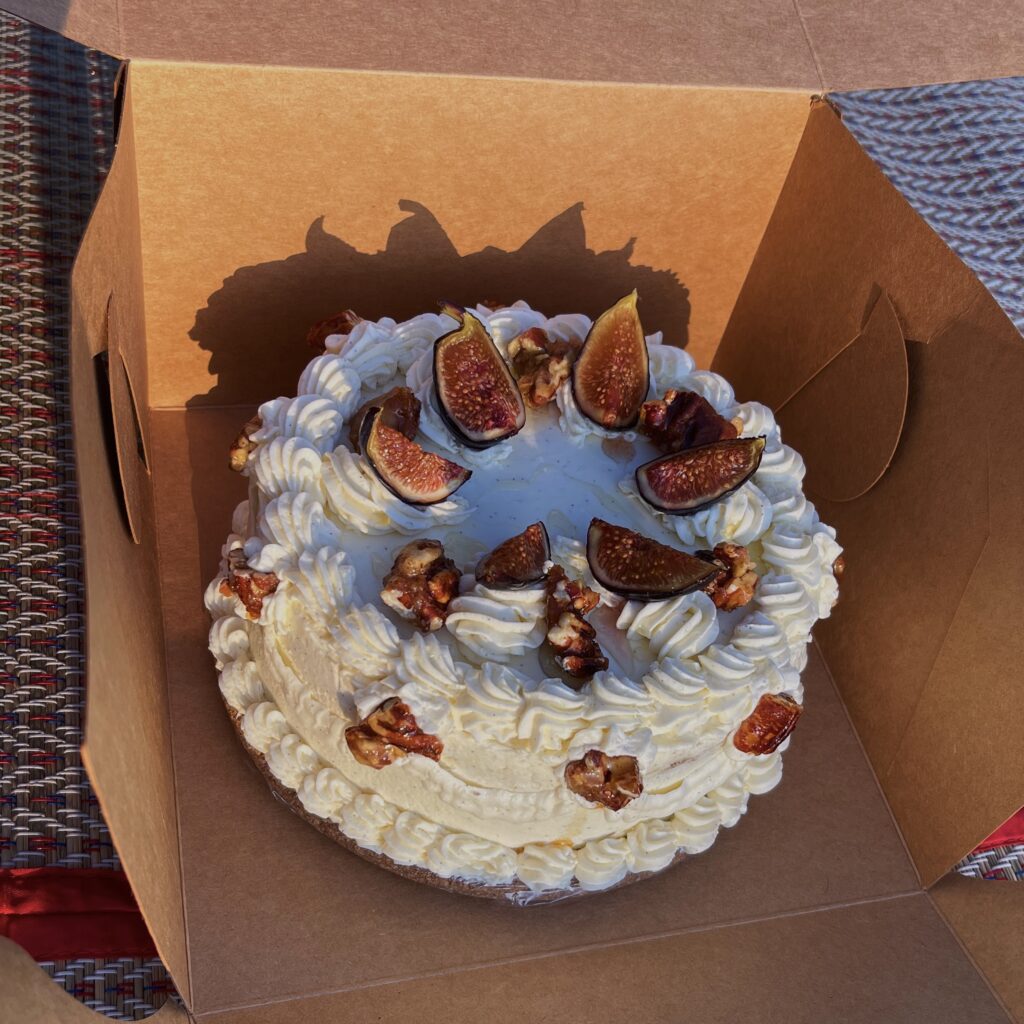
For my birthday this year, I made this Figgy Pecan Honey Cake (pic below), which was made of layers of honey-scented buttermilk cake, crunchy, sugar-jeweled pecan pieces, and a mascarpone swiss meringue buttercream. I topped it with ripe, juicy Ontario figs and a drizzle of farmer’s market honey. I made a more detailed post of the cake itself on my substack if you want to check that out. The cake had all these flavors and textures, and it is definitely my best cake so far, in part thanks to this buttercream.
Which brings us to Mascarpone Swiss Meringue Buttercream.
This buttercream tastes like sweet, soft table butter at fancy restaurants. It’s got a whipped butter-like sensation that melts on the tongue. The creaminess of the mascarpone acts to lighten the density of the butter. It’s definitely buttery but also milky and creamy, which is a perfect vessel for warm, cozy flavors like vanilla bean, jams, or nuts.
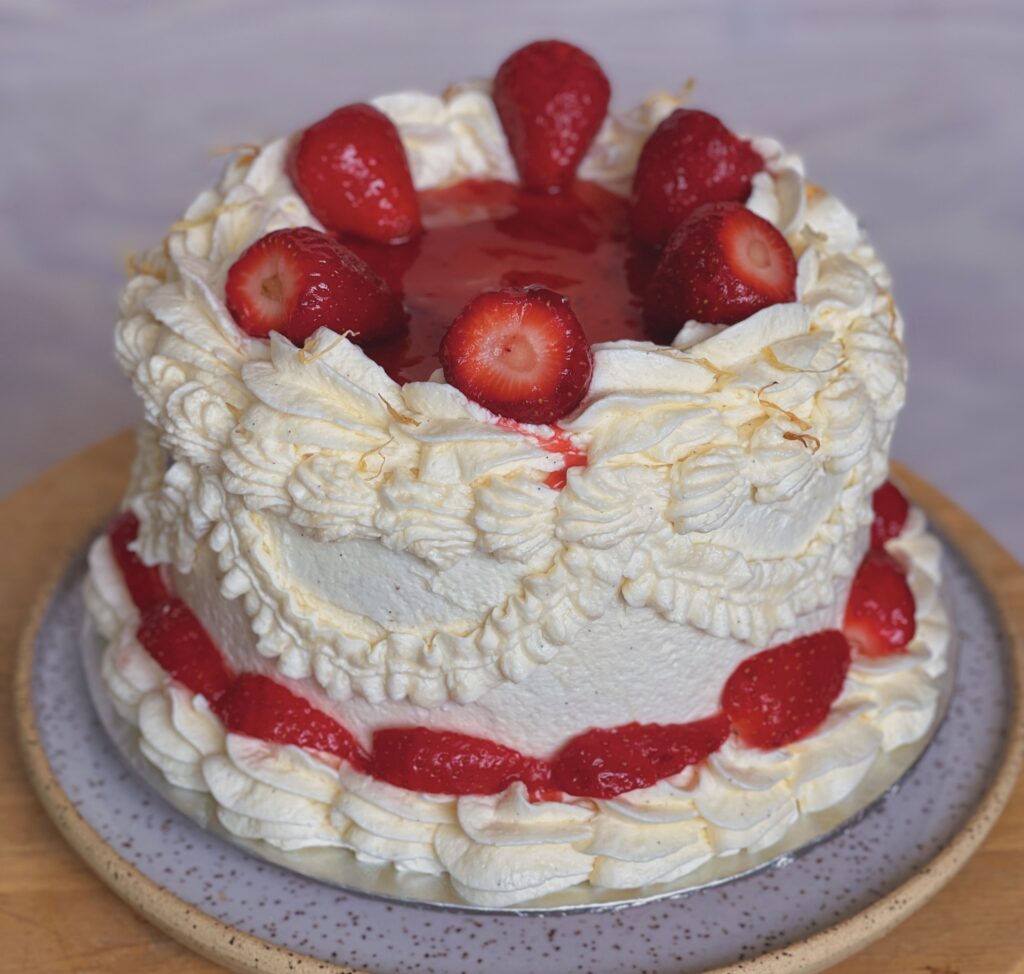
This recipe uses Swiss Meringue Buttercream (SMBC) as its foundation, which is renowned for its marshmallow fluffiness and immaculate smoothness that creates crisp piping details. This recipe won’t quite have SMBC’s crisp, smooth texture nor its complete, hardy stability, but it is definitely a better contender than whipped cream or American buttercream. It still holds firm and strong, protects and supports layers of dense, moist cake, and produces petite piped shells and roses.
The highlight and its trade-off is the fluffy texture and cream-forward, buttery flavor that will best most buttercreams in taste. However, this recipe is still a buttercream. If your hate for buttercream runs generations deeps, it probably won’t change your life. Although a delicious buttercream, it retains the essence of buttercream, especially when cold. You know, when a buttercream is cold, the frosting chips off, and that chip is hard like a pat of butter straight out to the fridge. This recipe will have like 30% of that.
Recipe time: Mascarpone Swiss Meringue Buttercream
Difficulty: Intermediate
Serving: 1 6-in cake (crumb coat + piping) and leftovers for another crumb coat
Time: Like 1-2 hours
Equipment: stand mixer or hand mixer, heatproof spatula, whisk, thermometer
Ingredients
- 300g sugar
- 200g egg whites (about 6 eggs)
- 240g butter, softened to room temperature
- 240g mascarpone, brought to room temperature
- 1/2 tsp salt
- 1/8-1/4 cream of tartar (just a wee pinch)
- 1 vanilla bean
- Flavoring: for my figgy pecan honey cake I used 1/2 tsp lemon extract, 1/2 tsp vanilla extract, 1 tsp orange blossom water
Directions
- Boil some water in a sauce pot. Just an inch or so. We are going to put a bowl on the pot and don’t want the pot to directly touch the water.
- In a heatproof bowl (I used my stand mixer bowl), add your egg whites, sugar, cream of tartar, and vanilla bean seeds (if using). Give this a mix with a whisk to incorporate.
- Get your bain-marie on, and place the bowl on top of the pot of boiling water. Keep the heat on medium-low.
- Continually mix with a whisk or spatula so that the eggs don’t cook.
- Keep checking with a thermometer until the mixture reaches 85 Celsius
- in my experience, the mixture hovers at 78 C before going above 80 C. Just be patient!
- Once at 85 C, take the bowl off the heat and affix it to the stand mixer.
- For stand mixer: use the whisk attachment and whisk on high (about speed 6-8 for KitchenAid)
- For hand mixer, just mix on high, off heat. Use a oven mitt, and be careful because it’s really hot!
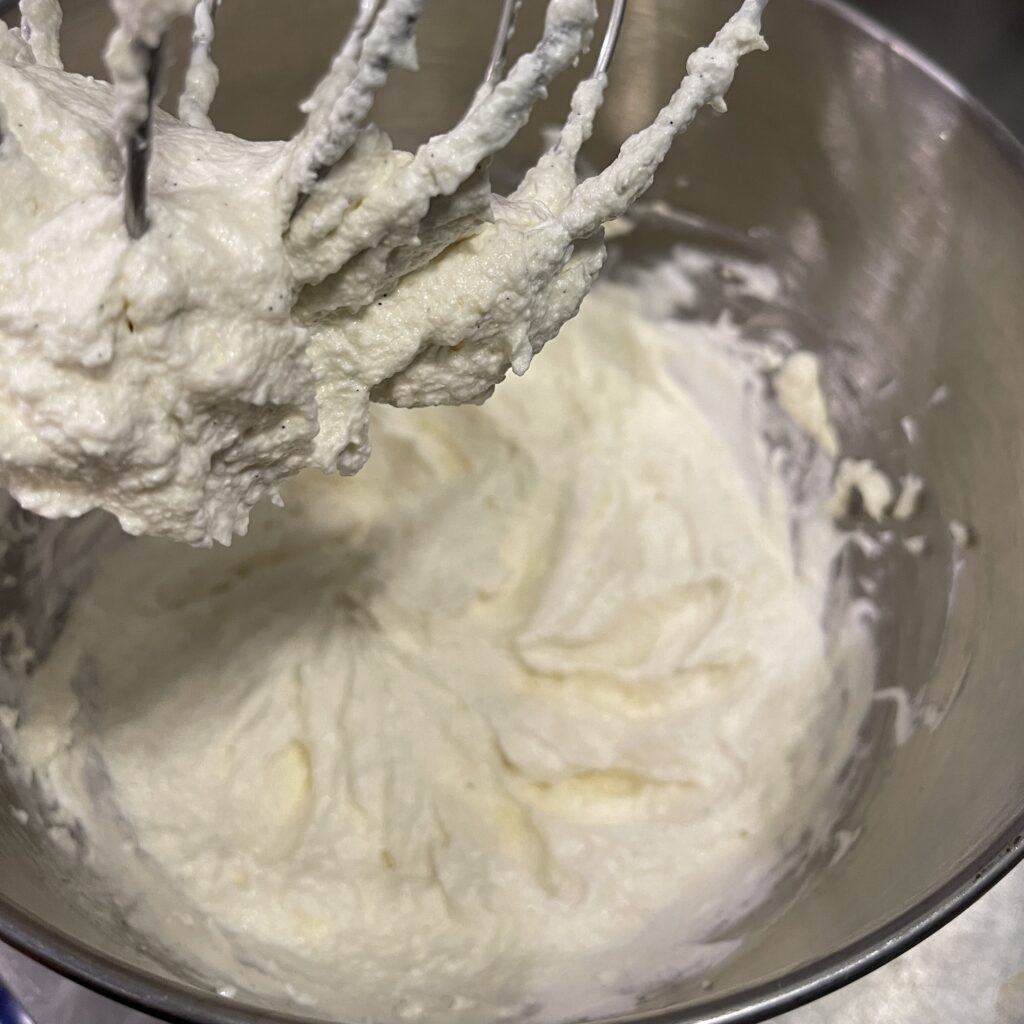
- The mix will become super fluffy, white, and glossy. We want the peaks to be stiff and the bowl to be cool enough to handle (about 25-32 Celsius).
- If the meringue is too warm, the butter will cause the frosting to lose structure and curdle. Just pop it in the fridge for like 5-10 minutes.
- If the meringue is too cold, the butter won’t emulsify, and the frosting will look broken. Just place over the now cooled but still warm bain marie for 5-10 minutes
- Switch to a paddle attachment, mix on high, and add dollops of butter, one by one. Try to incorporate all the butter in the meringue before adding the next dollop. I aim for about a 1-2 tablespoons per dollop. Be sure to scrape the sides and bottom occasionally.
- There might be times where the frosting gets grainy. Don’t panic! Just continue to mix on high, and it will all incorporate.
- Just note that it’s very important that the butter is room temperature! The buttercream emulsion is sensitive to temperature.
- Once all the butter is added, start adding the mascarpone in the same manner.
- for a smoother buttercream, reduce to 180-200g of mascarpone.
- If you add all of it, after adding 225-240g the buttercream will start to “break” or look grainy/curdled. Continuing the mix on high for 5-10 minutes will bring back some smoothness, but it will still be a little grainy. Personally, I’m ok with the trade-off for a creamier, fluffier buttercream.
- Finally add the flavorings or colorings. For my figgy pecan honey cake, I used lemon extract, vanilla extract, and orange blossom water, which resulted in a brighter, slightly floral flavor. But other good additions are almond extract, orange extract, or small amounts of jam. Mix well!
- The buttercream is done and ready to use for your crumb coat! However, you can also freeze for up to 6 months! Just bring to room temp and rewhip when ready to use.
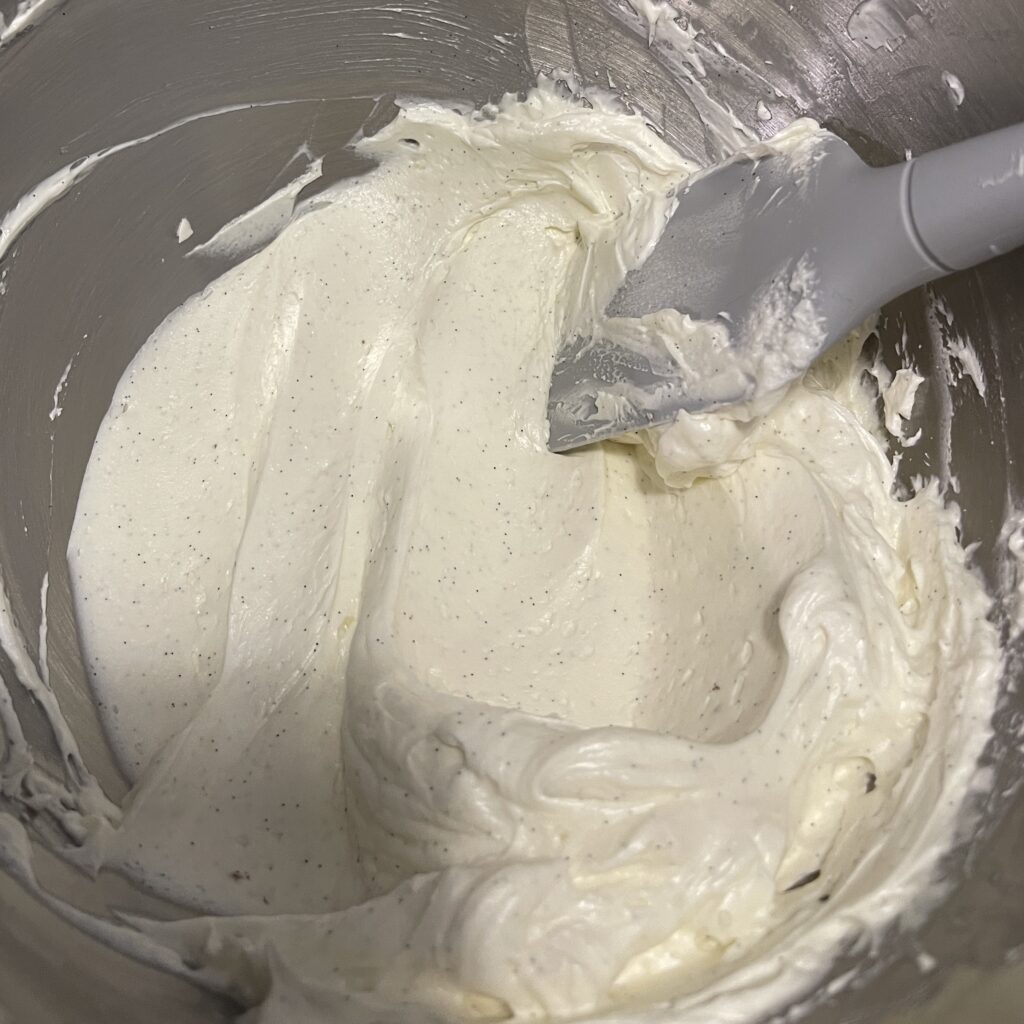
*full recipe of butter and mascarpone